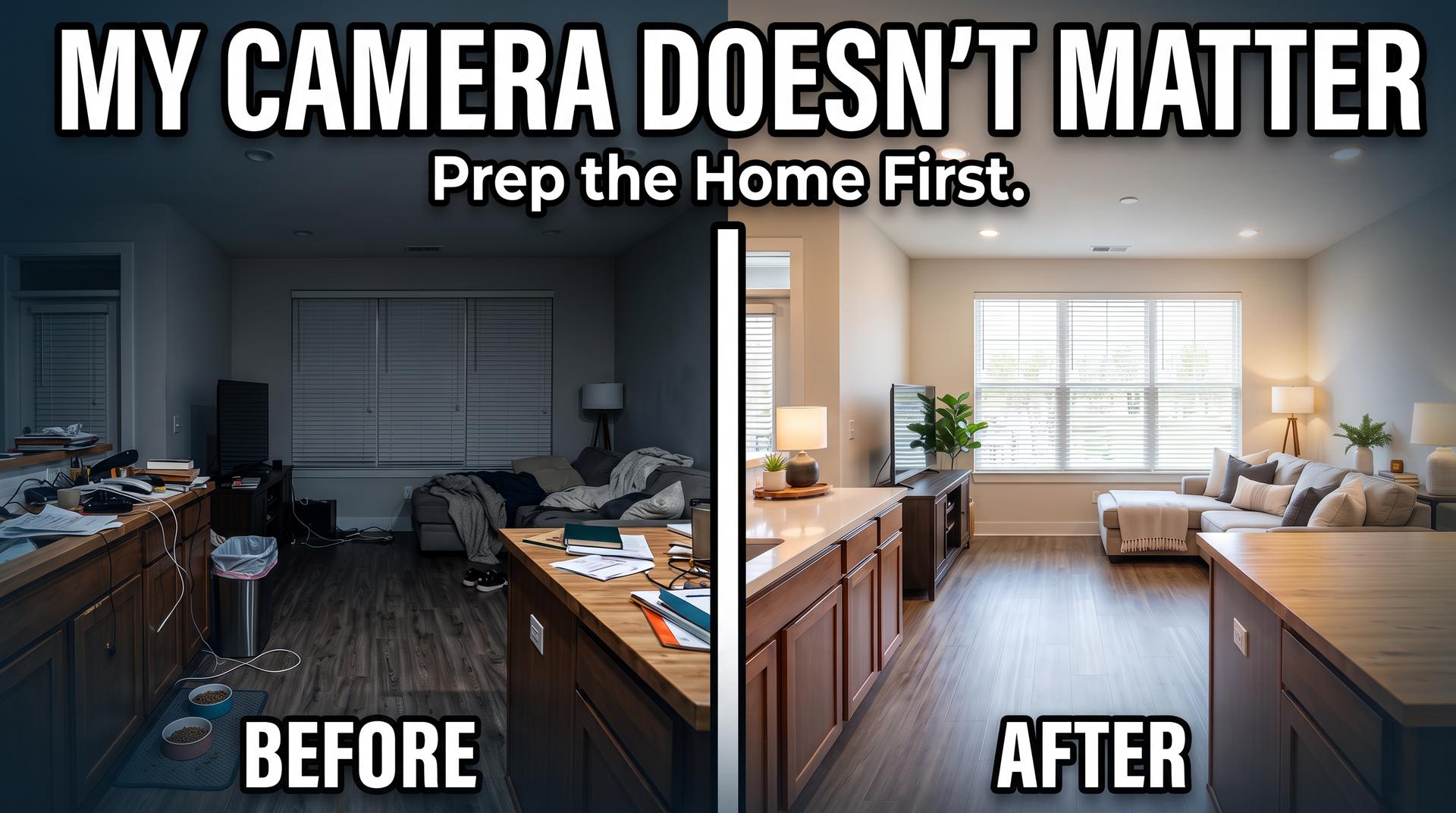
One of the biggest misconceptions people have about real estate photography is that great listing photos happen because of the camera. It’s easy to assume that if a photographer has the newest camera body or the most expensive lens, the photos will automatically look incredible.
The reality is much different.
After photographing thousands of homes over the years, I’ve learned that preparation has a much bigger impact than the camera itself. Some of the best listing photos I’ve ever captured weren’t taken in million-dollar homes. They were taken in homes that were thoughtfully prepared before I arrived.
The camera records what’s in front of it. Preparation determines what that camera sees.
Buyers Make Decisions in Seconds
When buyers are scrolling through Zillow, Realtor.com, or social media, they aren’t carefully analyzing every image. They’re making emotional decisions almost instantly.
They’re asking themselves questions without even realizing it:
- Does this home feel clean?
- Does it feel spacious?
- Does it look well cared for?
- Can I picture myself living here?
Those impressions happen in seconds—sometimes even fractions of a second.
What’s interesting is that buyers spend far more time looking at listing photos than reading the property description. Most aren’t studying every word of the listing remarks. They’re clicking through images, imagining where their furniture would go, picturing family dinners around the dining room table, or thinking about relaxing with a cup of coffee on the back deck.
Long before a showing is ever scheduled, the photos are doing most of the selling.
That’s why preparing your home before photo day can make such a dramatic difference.
1. Clear the Surfaces
One of the easiest ways to improve listing photos is by clearing off flat surfaces throughout the home.
Kitchen counters, bathroom vanities, nightstands, coffee tables, desks, and entry tables tend to collect everyday items without us noticing. Mail, paper towels, soap dispensers, charging cables, coffee makers, and miscellaneous decorations all create visual clutter.
The goal isn’t to make the home feel empty. It’s to eliminate visual noise.
Every object in a photograph competes for the viewer’s attention. When buyers see a countertop covered with everyday items, their brain has to process every one of them. The room immediately feels busier—and often smaller.
When those same surfaces are mostly clear, buyers stop looking at the clutter and start noticing the space itself. Countertops appear larger. Rooms feel cleaner. The home naturally feels more premium.
2. Turn On Every Light and Open the Blinds
Lighting changes everything.
Bright homes feel larger, cleaner, and more inviting. Natural light adds warmth, while interior lighting helps create consistency throughout the home.
One thing I often tell clients is that buyers aren’t simply purchasing square footage. They’re buying a feeling.
Bright spaces feel welcoming. Dark spaces often feel smaller and less inviting, even if they’re the exact same size.
Before your photographer arrives, turn on every interior light that works, open the blinds, and let as much natural light into the home as possible. It’s one of the simplest things you can do to elevate your photos.
3. Move Vehicles Out of the Driveway
This tip gets overlooked all the time.
Homeowners are understandably focused on cleaning the inside of the house, but the exterior is usually the very first image buyers see online. That first impression matters.
When a vehicle is parked in front of the home—or even sitting in the driveway—it immediately becomes one of the most noticeable objects in the photo. Instead of appreciating the landscaping, architecture, front porch, or entryway, buyers’ eyes are drawn to the truck, SUV, or family sedan.
And before anyone asks…
No, photographers can’t simply remove every vehicle with Photoshop. While it’s sometimes possible, it’s always faster, easier, and produces a more natural result when vehicles are moved before the photo session begins.
4. Remove Everyday Distractions
Some of the smallest items in a home can become the biggest distractions in a photograph.
Trash cans. Pet bowls. Tissue boxes. Extension cords. Floor mats. Laundry baskets. Dog crates. Cleaning supplies.
When you live in a home every day, your brain naturally filters these items out. You stop noticing them.
The camera doesn’t.
In photographs, these everyday objects often become surprisingly prominent. Once buyers notice them, their attention shifts away from the room itself and onto the distraction.
Removing these small items helps buyers focus on what actually matters—the space, the finishes, and the features that make the home special.
The Goal Isn’t Perfection
Some homeowners worry that preparing for professional photography means making the home feel sterile or unrealistic.
That’s not the goal.
We’re not trying to convince buyers that no one lives there. We’re simply helping them focus on the home instead of the everyday objects inside it.
Think about walking through a professionally staged model home.
You notice the layout. The kitchen. The oversized windows. The ceiling height. The beautiful finishes.
You probably don’t remember whether there was a tissue box next to the sink or a dog bowl tucked into the corner.
Those things don’t help sell the house. They simply compete for attention.
Running Out of Time? Here’s My Favorite Tip
If you’re running short on time before your photographer arrives, don’t waste valuable minutes trying to perfectly organize everything.
Hide it.
Seriously.
Put it in a closet. Store it in the garage. Place it in a room that isn’t being photographed.
Professional photographers aren’t judging your storage system. Our goal is to create the strongest possible first impression online.
Your Photos Create the First Showing
In today’s real estate market, listing photos aren’t just documentation—they’re marketing.
They’re often the deciding factor in whether someone clicks on a listing, schedules a showing, or keeps scrolling.
The photos earn the click.
The photos create curiosity.
The photos help buyers become emotionally invested before they ever step through the front door.
A little preparation before photo day can be the difference between images that simply look good and images that truly capture attention.
Because great real estate photography doesn’t start with the camera.
It starts with preparation.

Be The First To Comment